In the kingdom of Tidemurk Reef, everyone knew three rules.
First: currents were like gossip—if you fought them, you’d end up somewhere embarrassing.
Second: whale songs were not “just noise.” They were history, directions, jokes, and sometimes—if you listened wrong—an insult about your posture.
Third: octopuses were expected to be clever, bold, and at least a little dramatic.
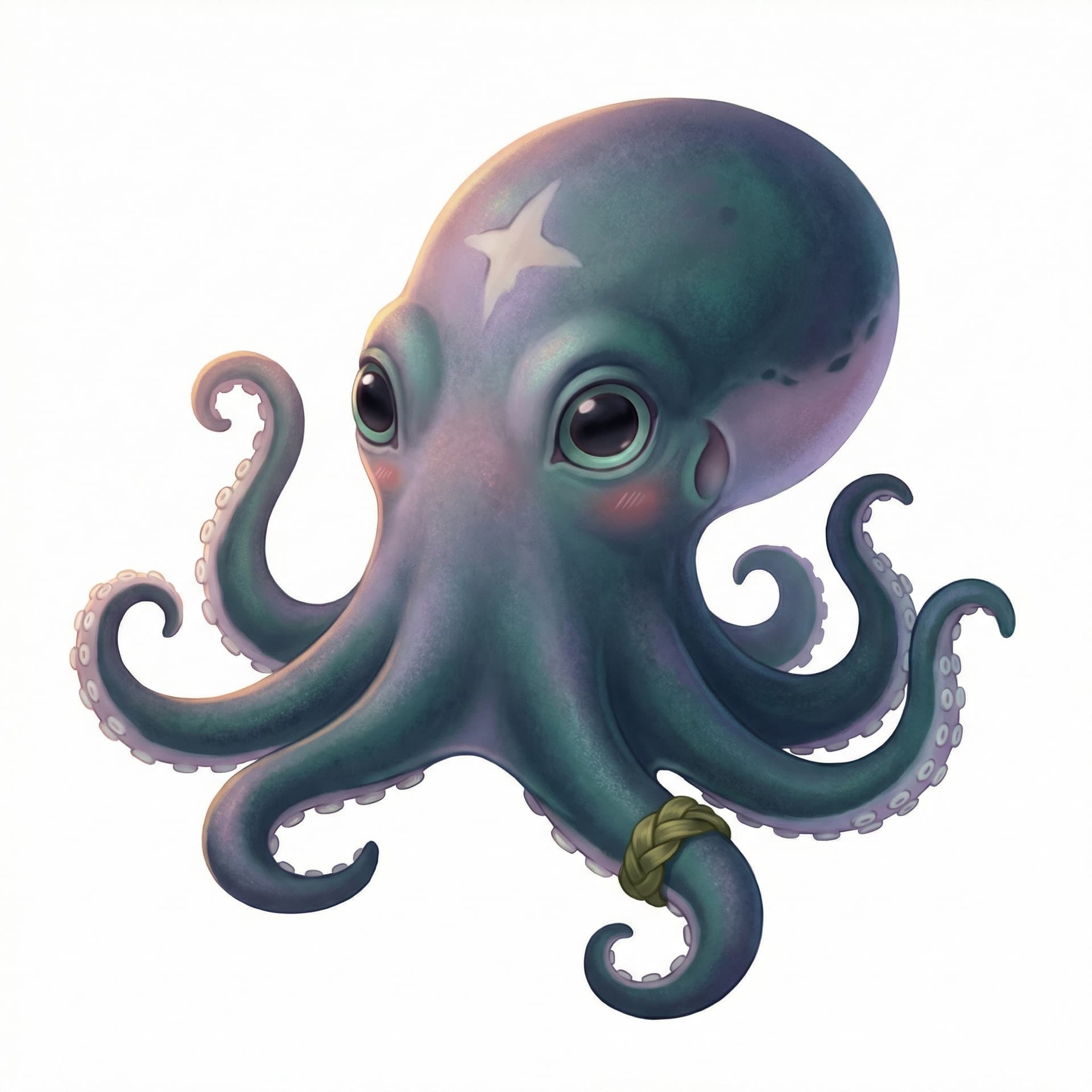
Kendra was none of those things in public.
She was clever, yes, but only quietly, the way a pebble can be heavy without announcing itself. When other sea-creatures gathered near the vents to swap stories, Kendra stayed in the shadowed lacework of coral. It was easier to be background decoration than to be someone who could make a mistake where everyone could see.
Mistakes had a way of sticking to her. A young parrotfish once asked her to help open a clam. Kendra had tried to be impressive, using a lever technique she’d deciphered from an old shell-plate covered in scratchy symbols. She’d pried too hard. The clam had snapped open like a trap and sprayed a cloud of silt straight into the parrotfish’s face.
The gathered crowd had burst into laughter. Kendra had laughed too—because that was what you did—while her skin turned a shade of embarrassed plum. Ever since, a lie clung to her like a second skin: *If Kendra spoke up, she would ruin things.*
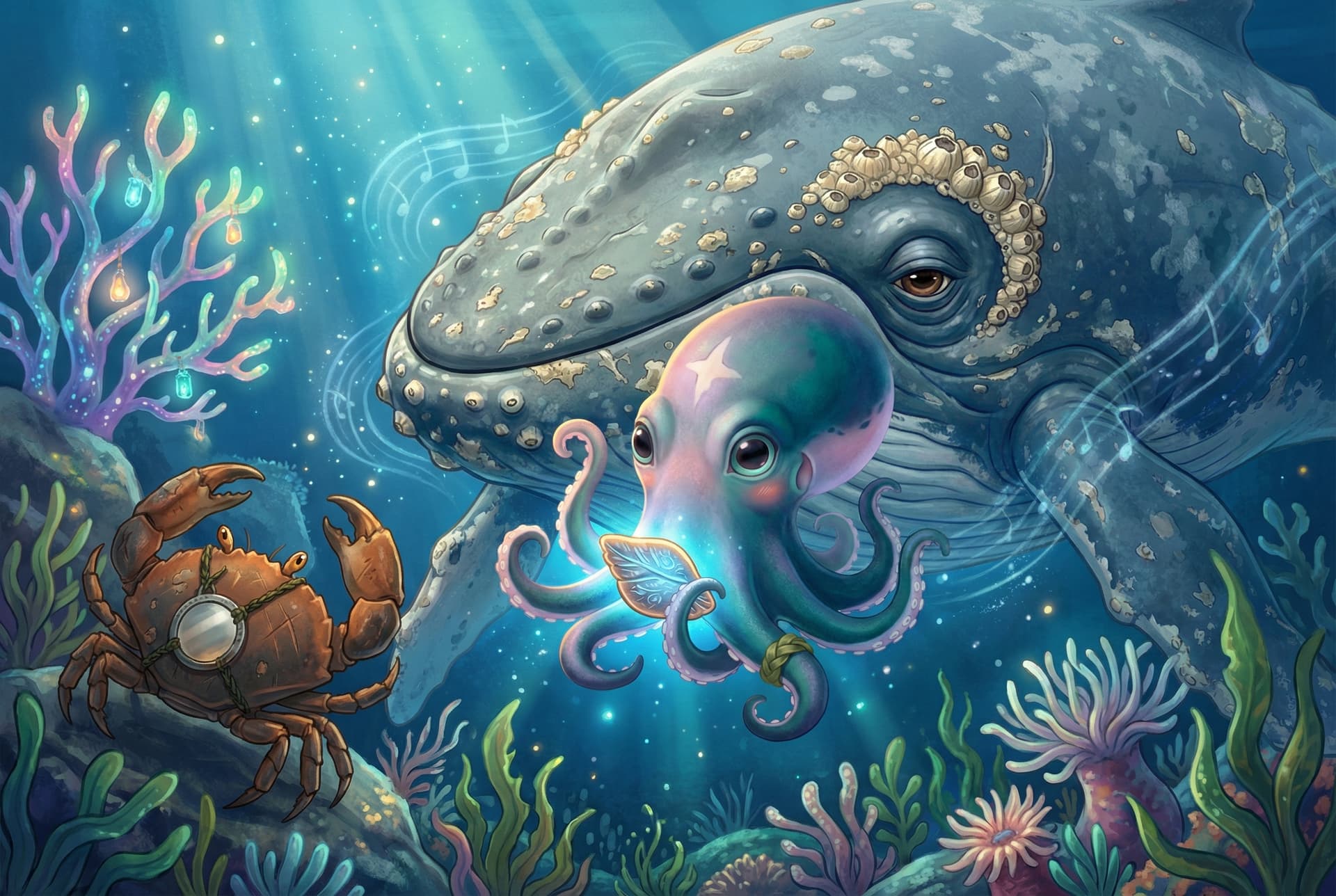
So she listened instead. And because she listened, she was the first to notice the whale.
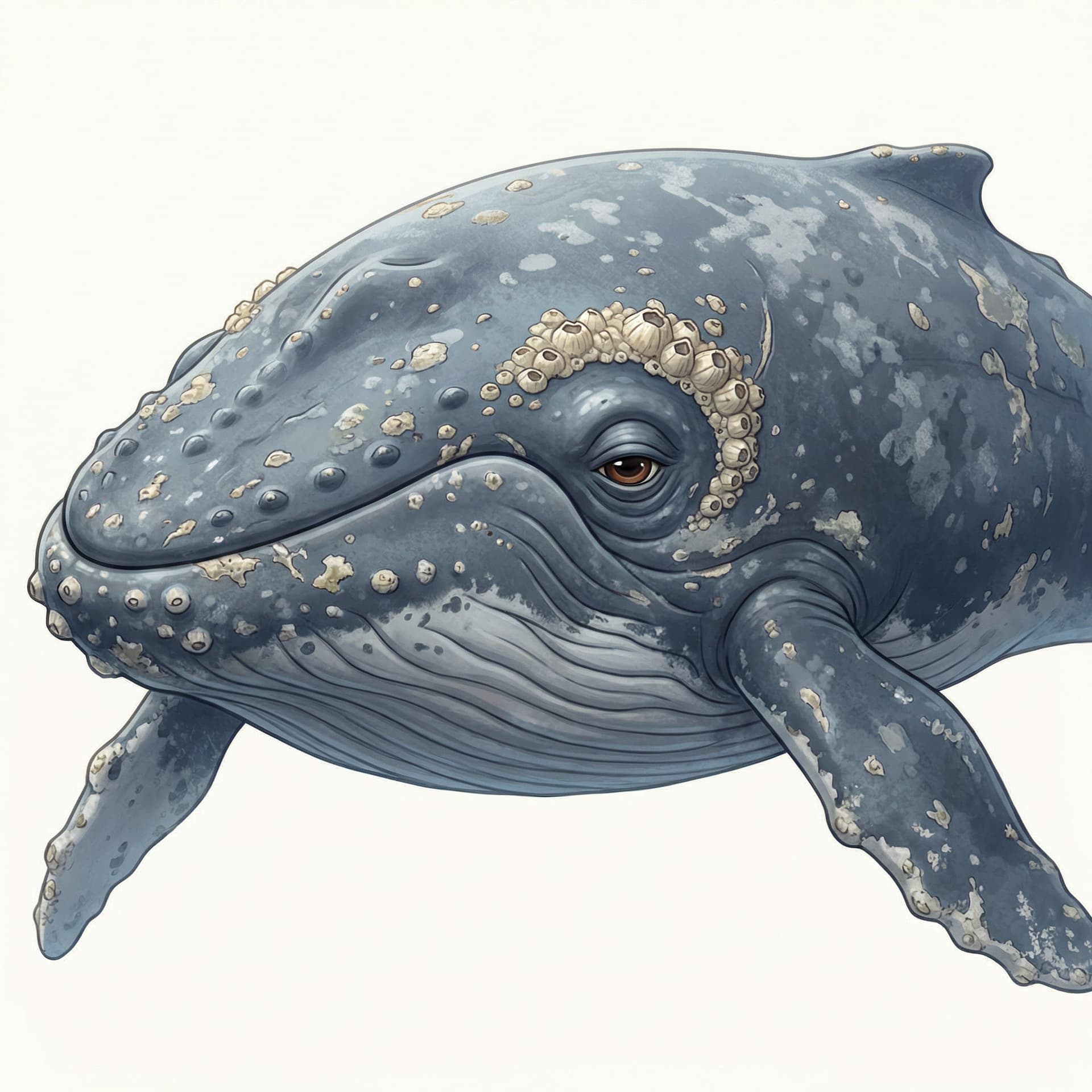
The water thickened with a low hum that pressed gently against Kendra’s suckers. Then a shadow slid across the reef. Not the young, bouncy kind that breezed through on migration like a celebrity passing a small-town bakery, but a whale that carried the weight of time in her ribs. Barnacles freckled her skin like old medals.
The whale’s eye—dark, calm, and ancient—glanced down.