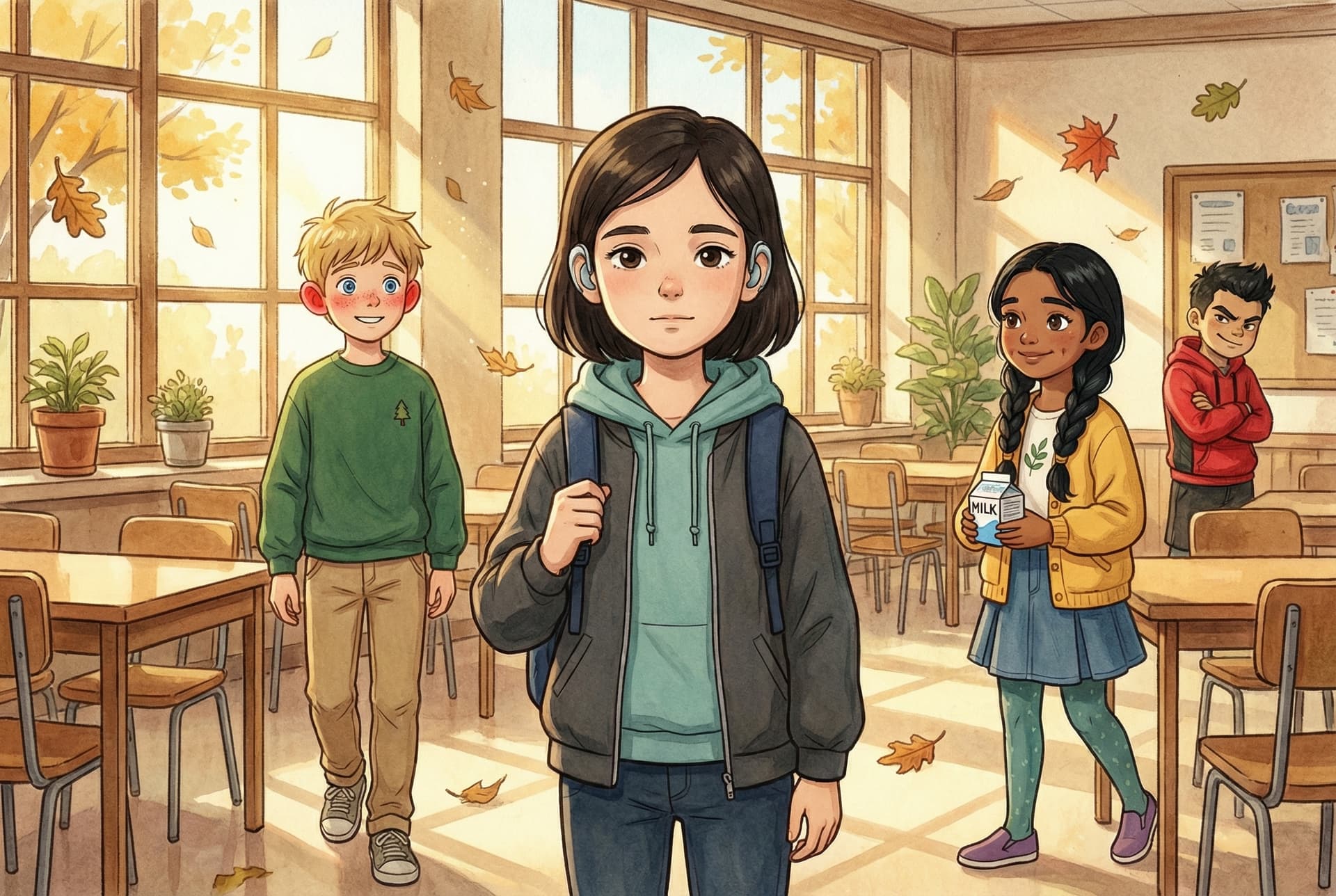
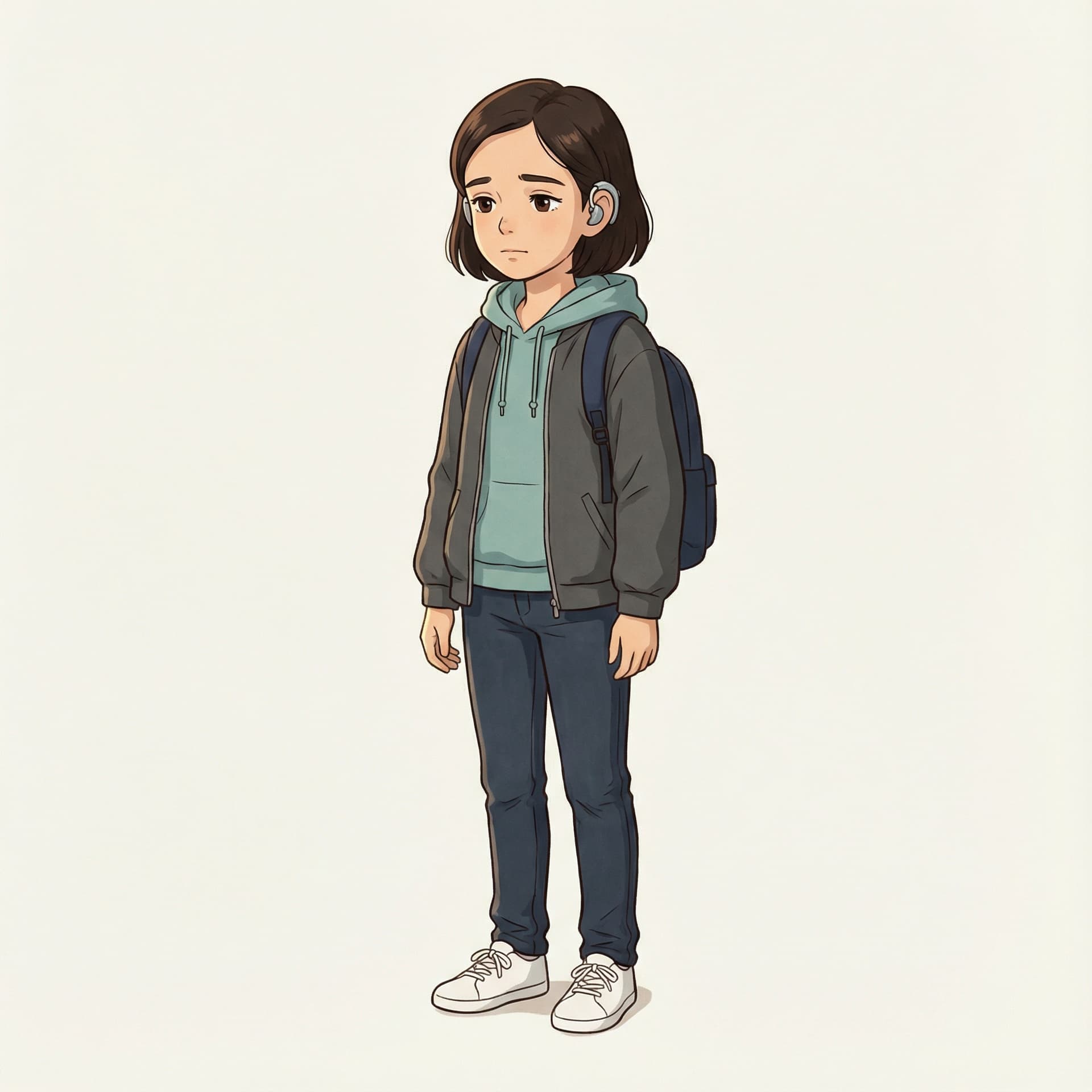
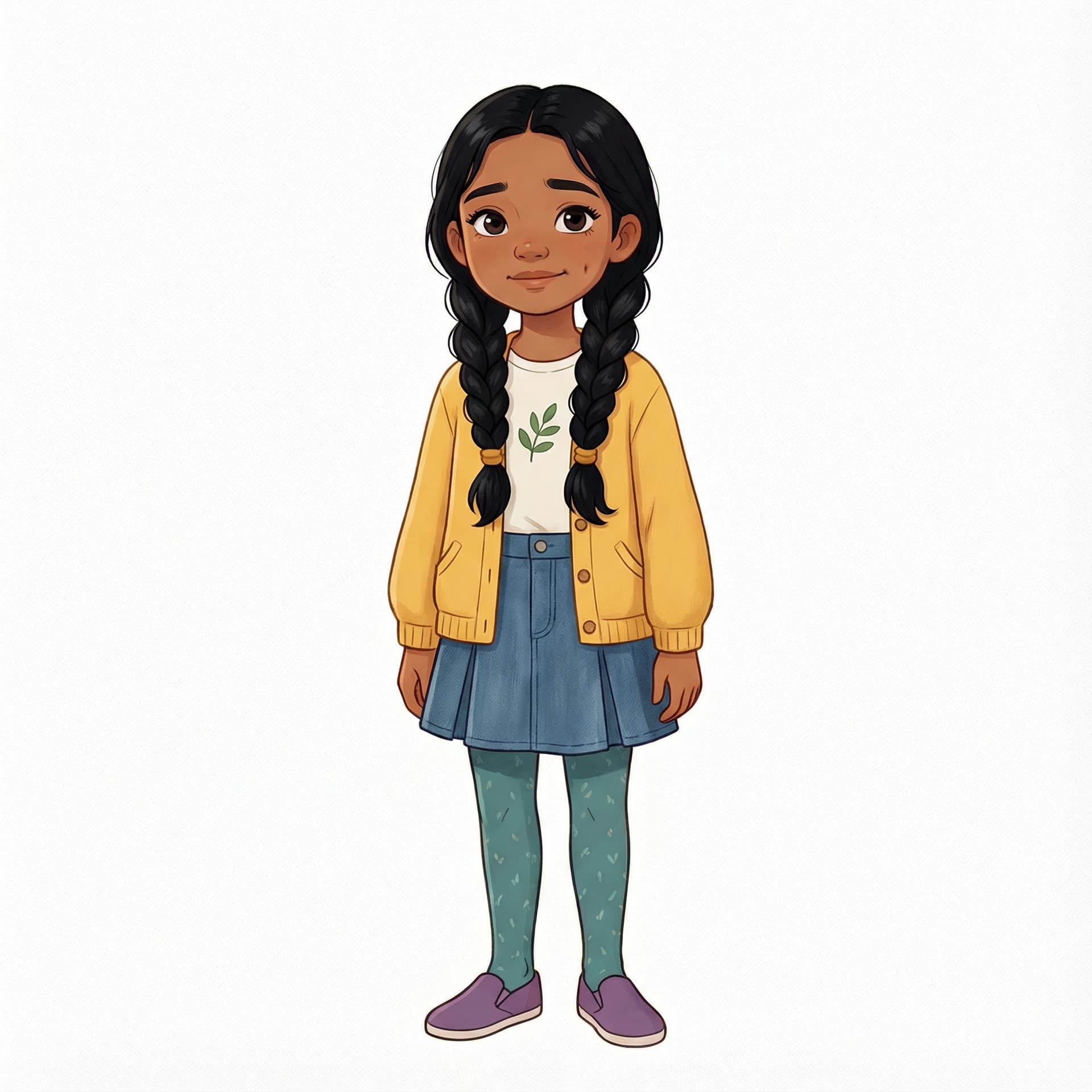
Regina knew the statistics of survival better than most adults. In the nature documentaries she devoured, the creature with the brightest markings was usually the one in the most danger. Camouflage was safety. Blending in meant living to see another sunrise. But as she stood before the double doors of Oakbridge Middle School, Regina adjusted the strap of her backpack and acknowledged the hard truth: she had zero capacity for camouflage.
She had been born with a rare genetic condition that affected the development of her facial bones. Her eyes slanted sharply downward, her jaw was recessed, and her ears were small, folded shapes that required hearing aids to function. To the eleven-year-olds waiting in the courtyard, she didn’t look like just another student. She looked like a question they were afraid to ask.
Regina took a breath, tasting the metallic tang of autumn air. She had spent the last five years homeschooling, surrounded by books and the safe, non-judgmental company of her two golden retrievers. Dogs didn’t care about cheekbones; they only cared about the kindness of your hands. But her parents had insisted it was time to rejoin the world, and Regina, despite the knot of anxiety in her stomach, secretly wanted to know if the world had room for her.
She pushed the doors open. The noise hit her first—a cacophony of shouting, slamming lockers, and squeaking sneakers. It was a sensory assault. As she walked down the main hallway, the noise didn't stop, but it changed. A ripple of silence followed in her wake, tracking her movement like a spotlight. Heads turned. Eyes widened. Then came the whispers, sharp and quick like static shocks.
Regina kept her chin up, focusing on the room numbers. Room 204. Advanced Biology. If there was anywhere she belonged, it was in a room dedicated to understanding how life worked.