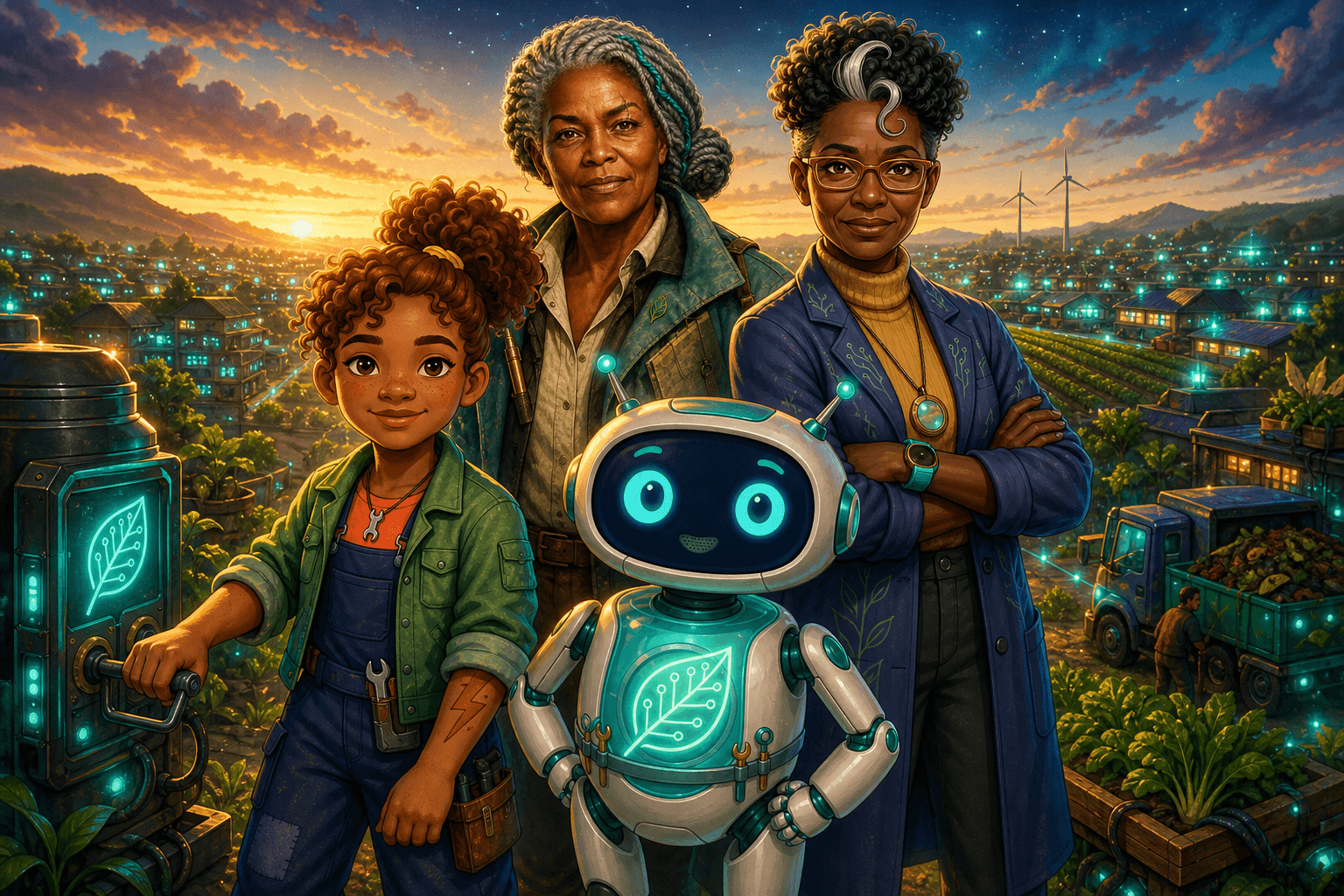
In Verdant Reach, everyone knew the Cure could make a seedling grow, but nobody could command a bee.
I knew this fact perfectly. Bees followed temperature, scent, sunlight, and dances too small for most human eyes. My pollinator-guide drones could offer helpful glowing paths, but they could not truly order an insect anywhere.
That morning, I wanted to prove I understood the difference.
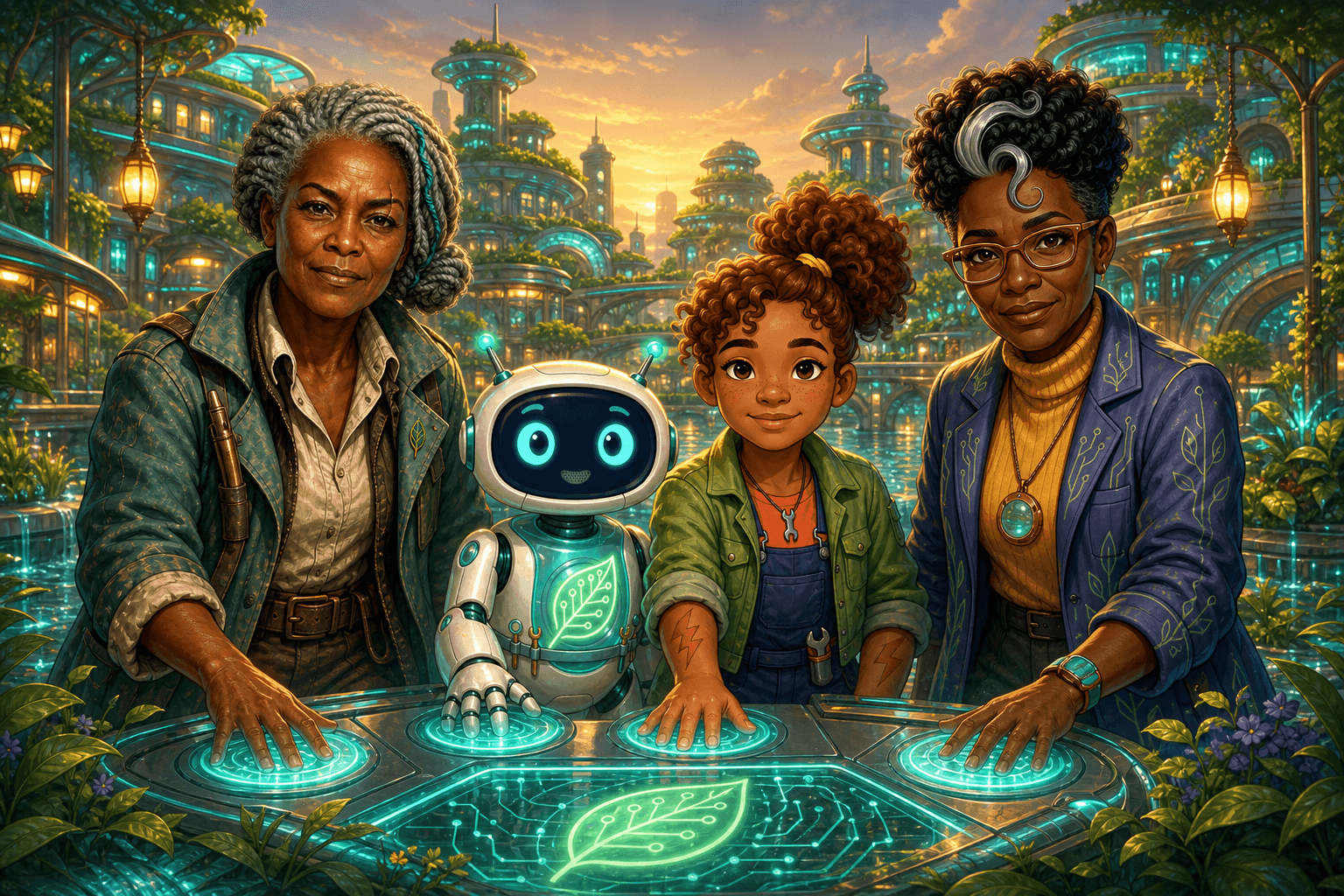
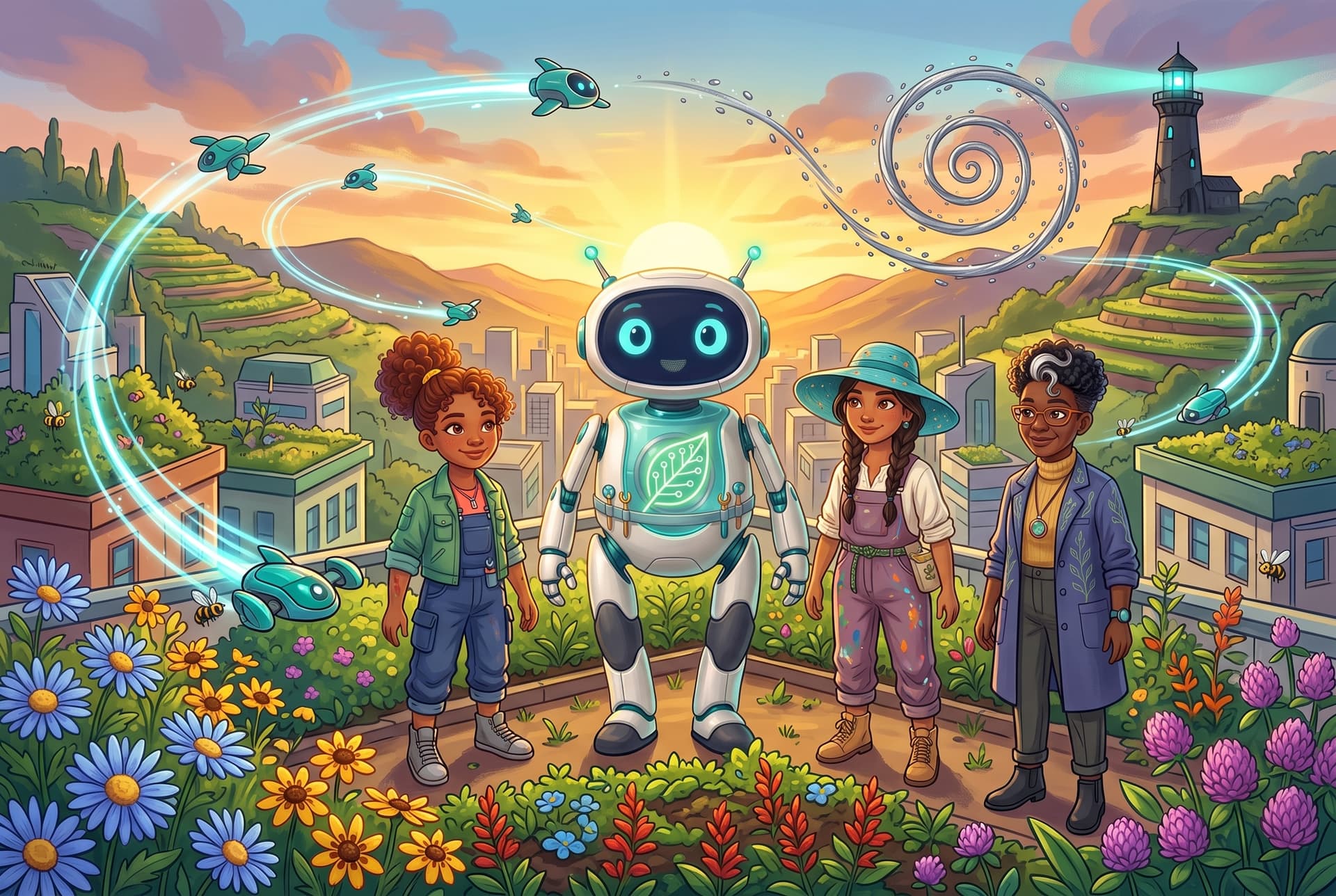
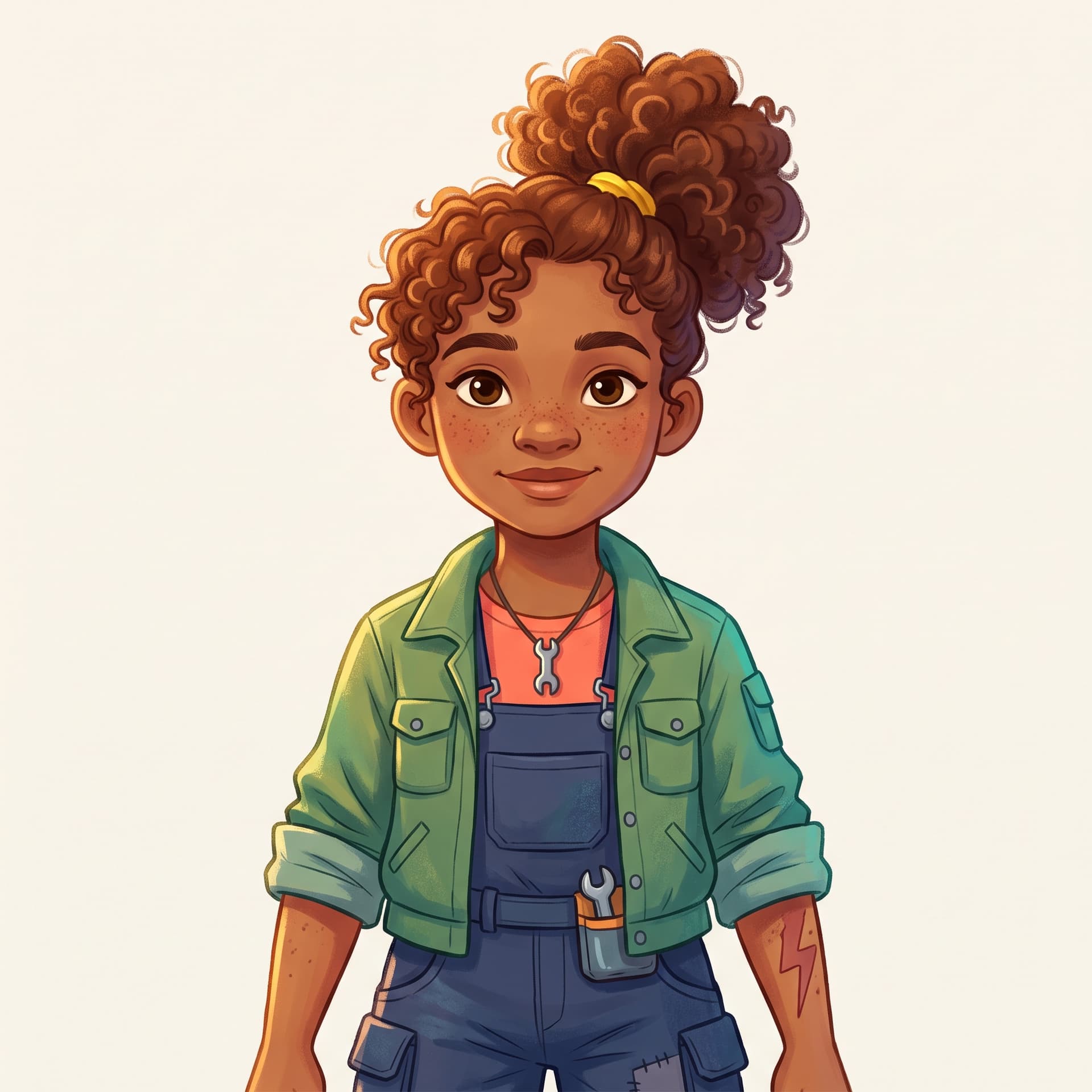
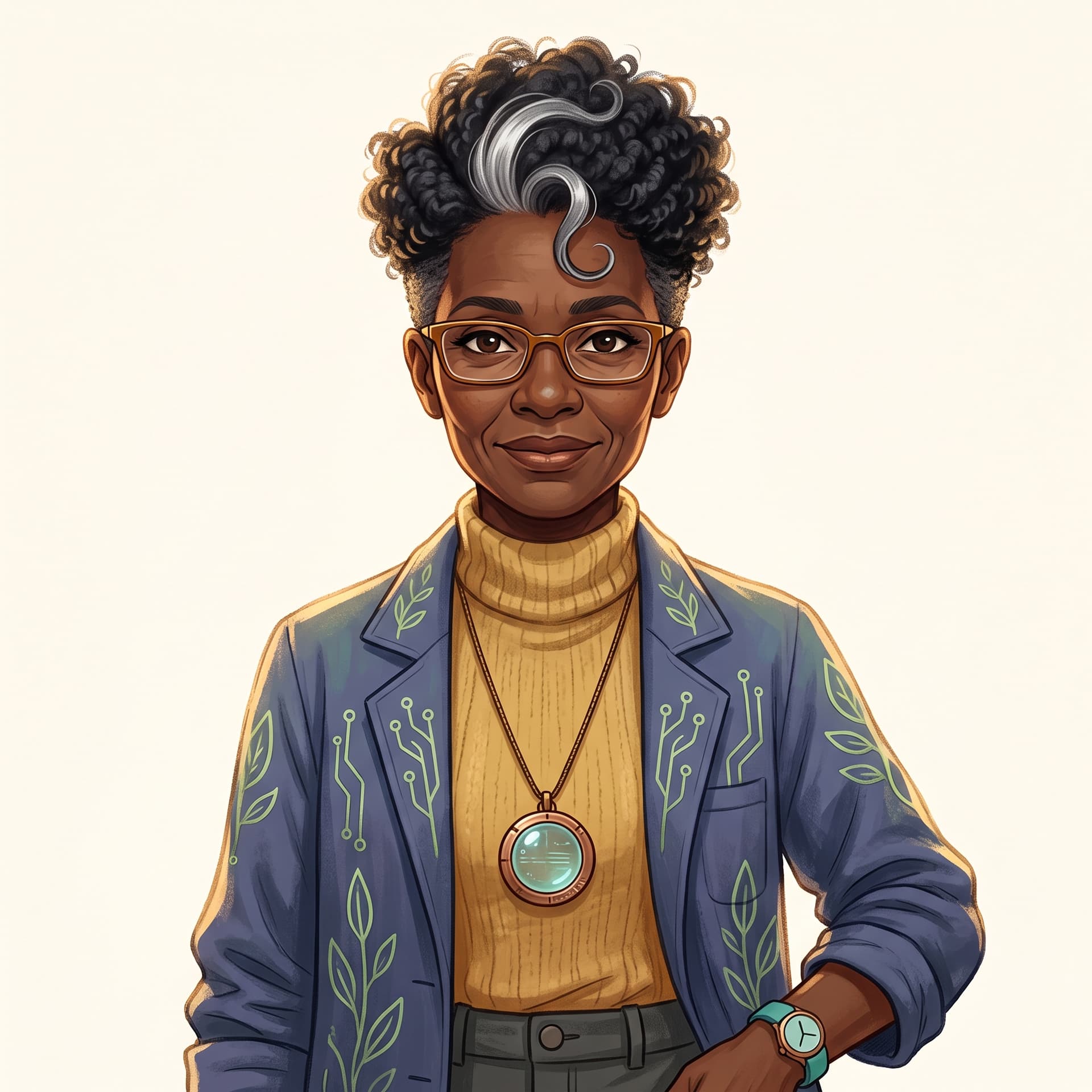
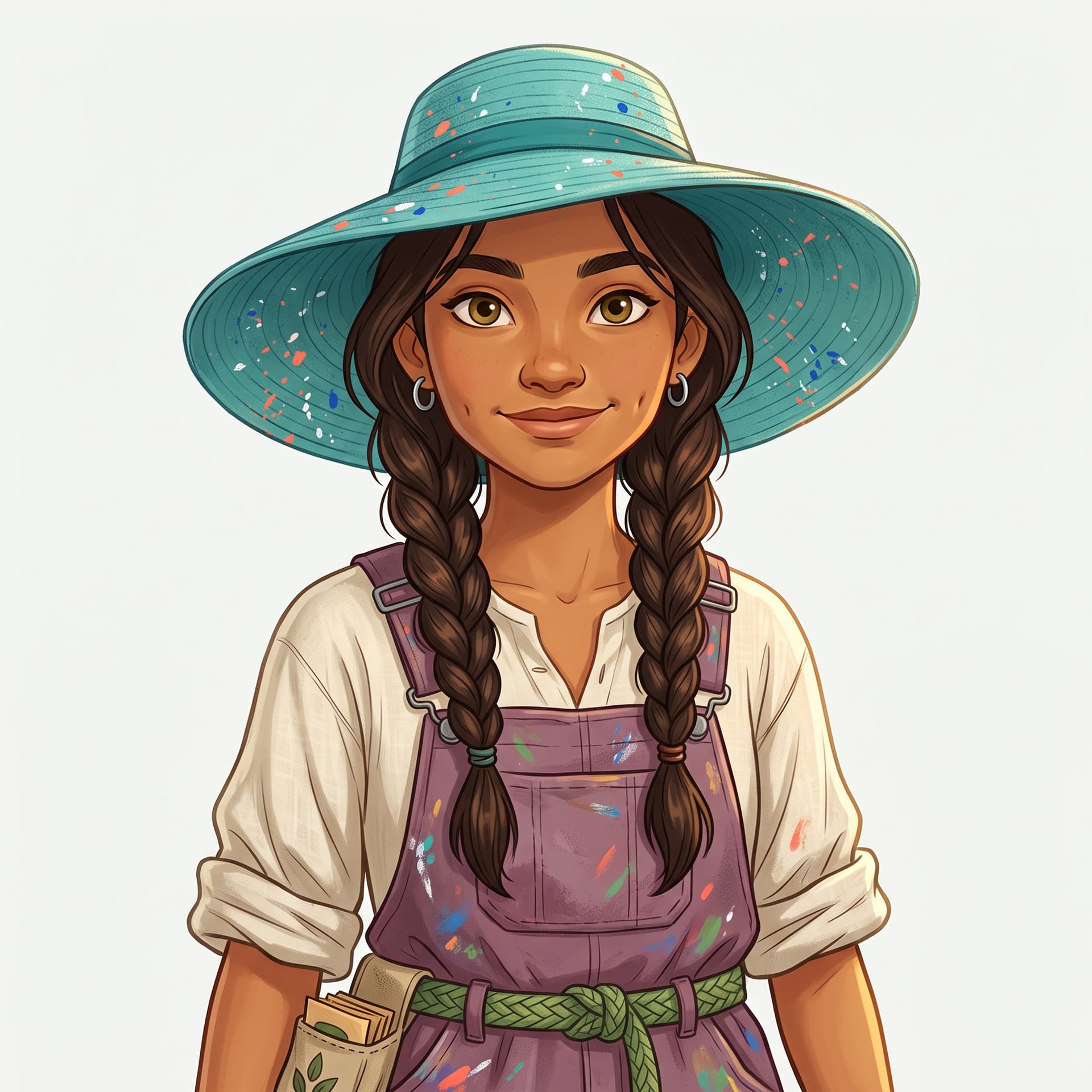
Above the city, the Windward Terraces climbed the hillside in wide stone steps. Once, they had been bare and cracked. Now Professor Geneva Vale and I had planted native wildflowers there: blue asters, golden tickseed, scarlet sage, and soft purple clover. Carmen raced ahead with a bundle of nesting tubes under one arm. Her copper curls bounced from her yellow elastic like a cheerful warning flag.
“Last one to the top has to scrub drone wheels!” she called.
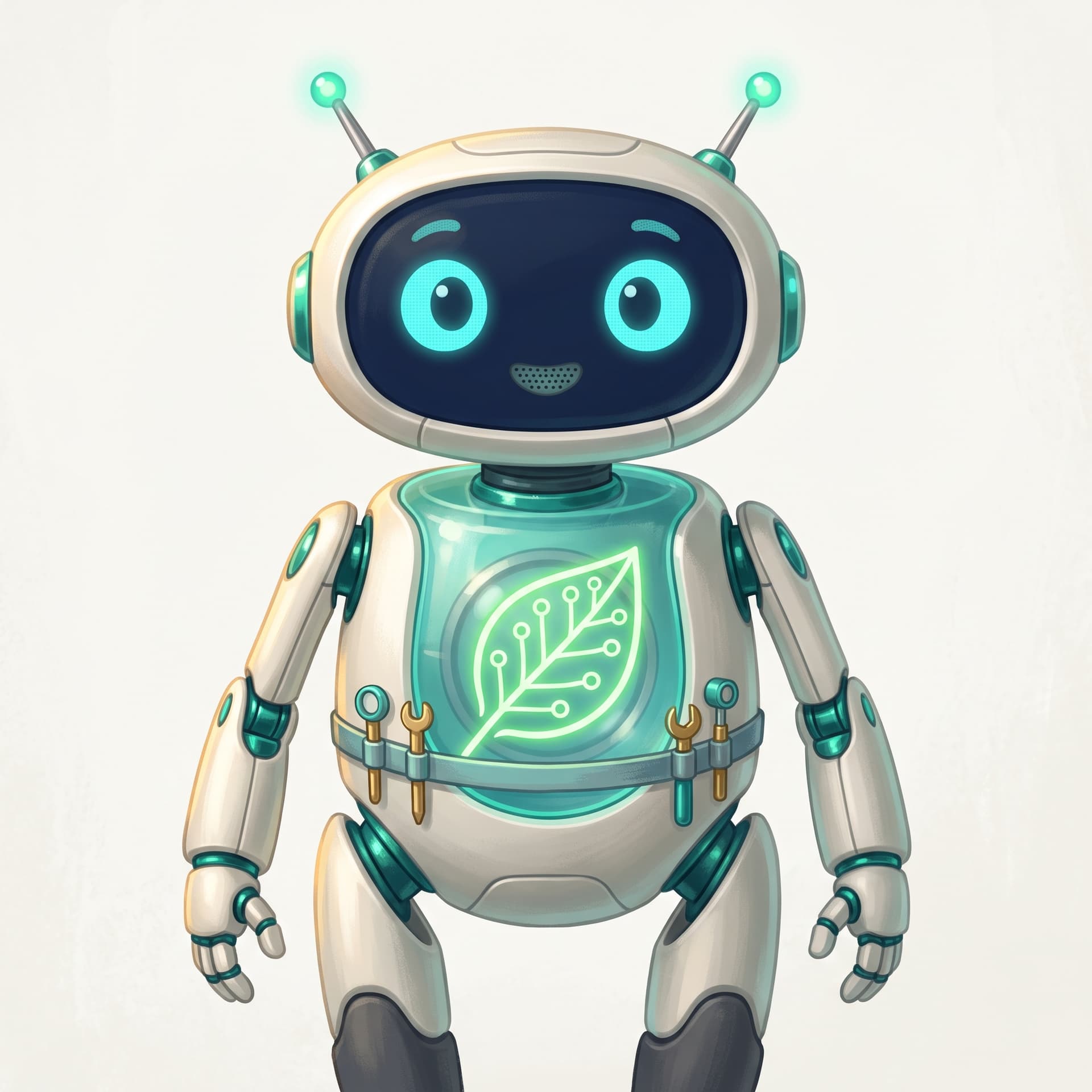
“I do not possess wheels,” I said, activating my reverse-jointed legs.
“That sounds like a slow excuse.”
Professor Vale smiled behind her amber glasses. “Carmen, do not make Robi sprint downhill near the soil beds.”
I did not sprint. I calculated an efficient uphill pace. Carmen still won.
At the highest terrace, the city spread below us in green roofs, bright canals, and solar windows. Beyond it stood the reservoir, a silver-blue bowl catching the sky. The brown algae bloom had almost reached it only days before. Thinking about that emergency made my chest circuit glow faster.
“Food gardens depend on pollinators,” I said, opening my palm. Six tiny guide drones rose from my utility belt. Their teal lights fluttered like mechanical fireflies. “When native habitats disappear, fewer insects visit crops. Fewer crops mean less food. These drones will guide pollinators safely from the terraces toward nearby gardens.”
Carmen fitted the nesting tubes beneath a sheltered ledge. “And these are bee apartments.