

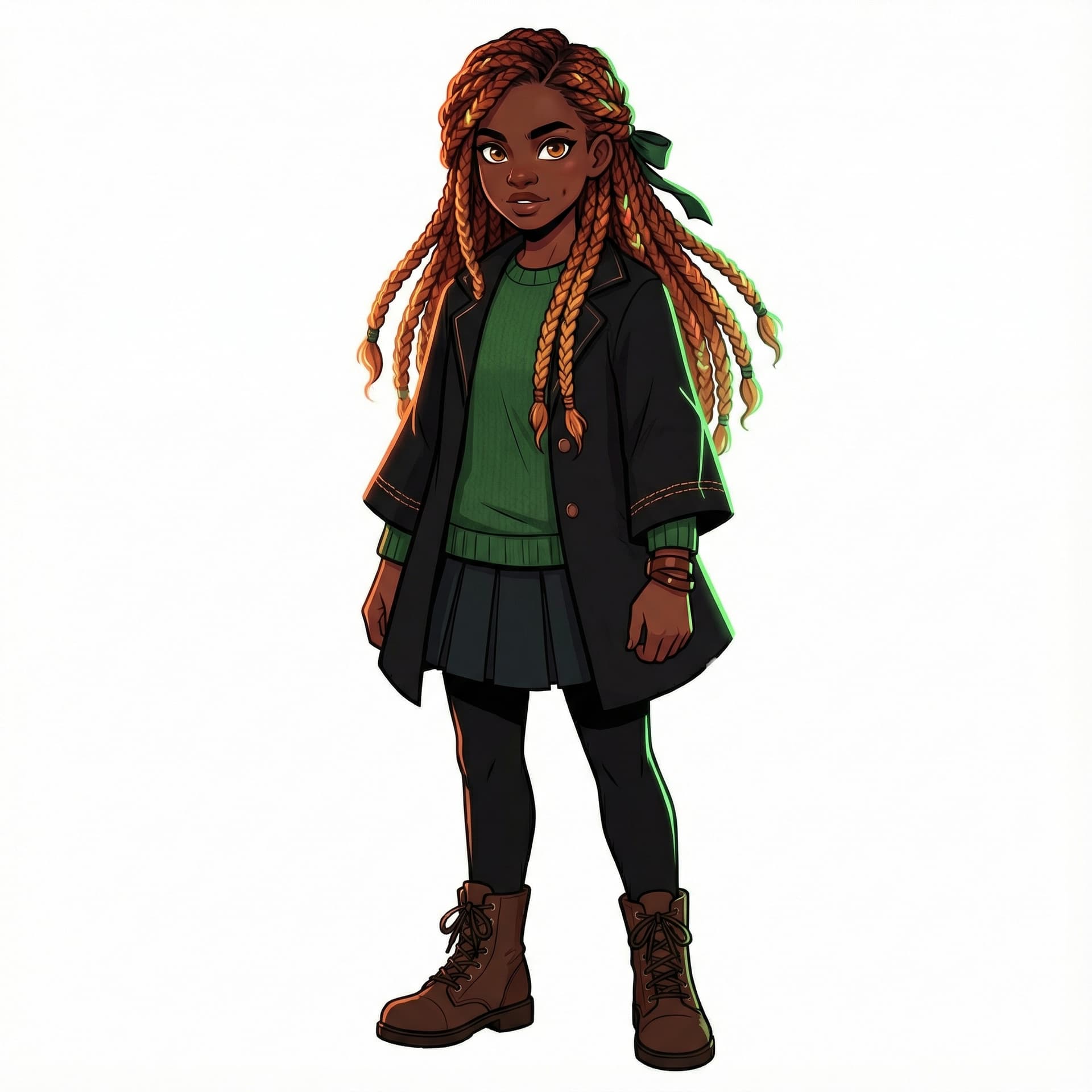
The lock gave with a soft click, like it had been waiting.
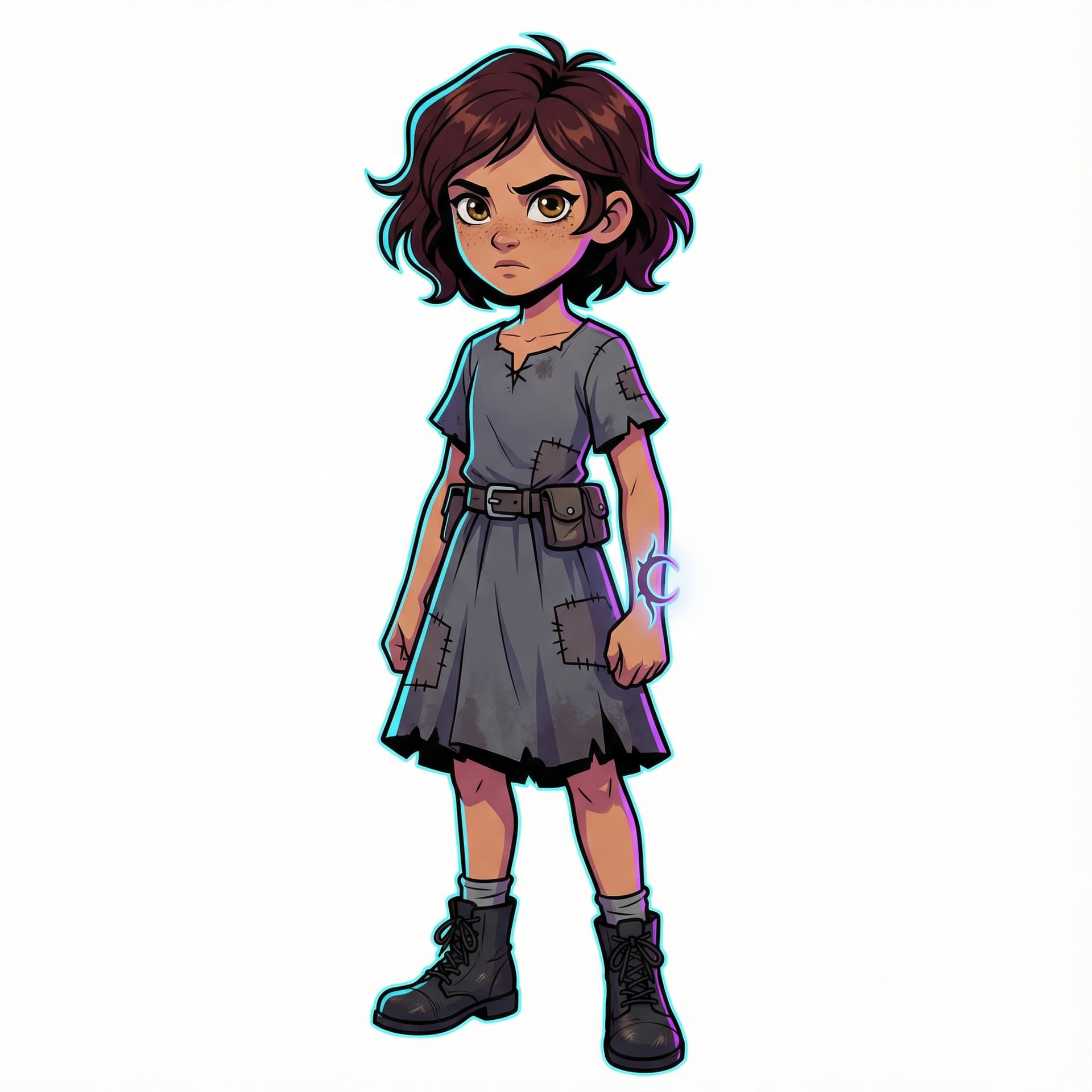
Genevieve’s fingers came away black—ink, not dust—and the old cabinet door swung open. The orphanage office was supposed to be empty at night. Mrs. Brine’s rules were supposed to be iron. Yet here Genevieve stood in the dark, barefoot on cold tiles, holding a key that hadn’t existed in her pocket an hour ago.
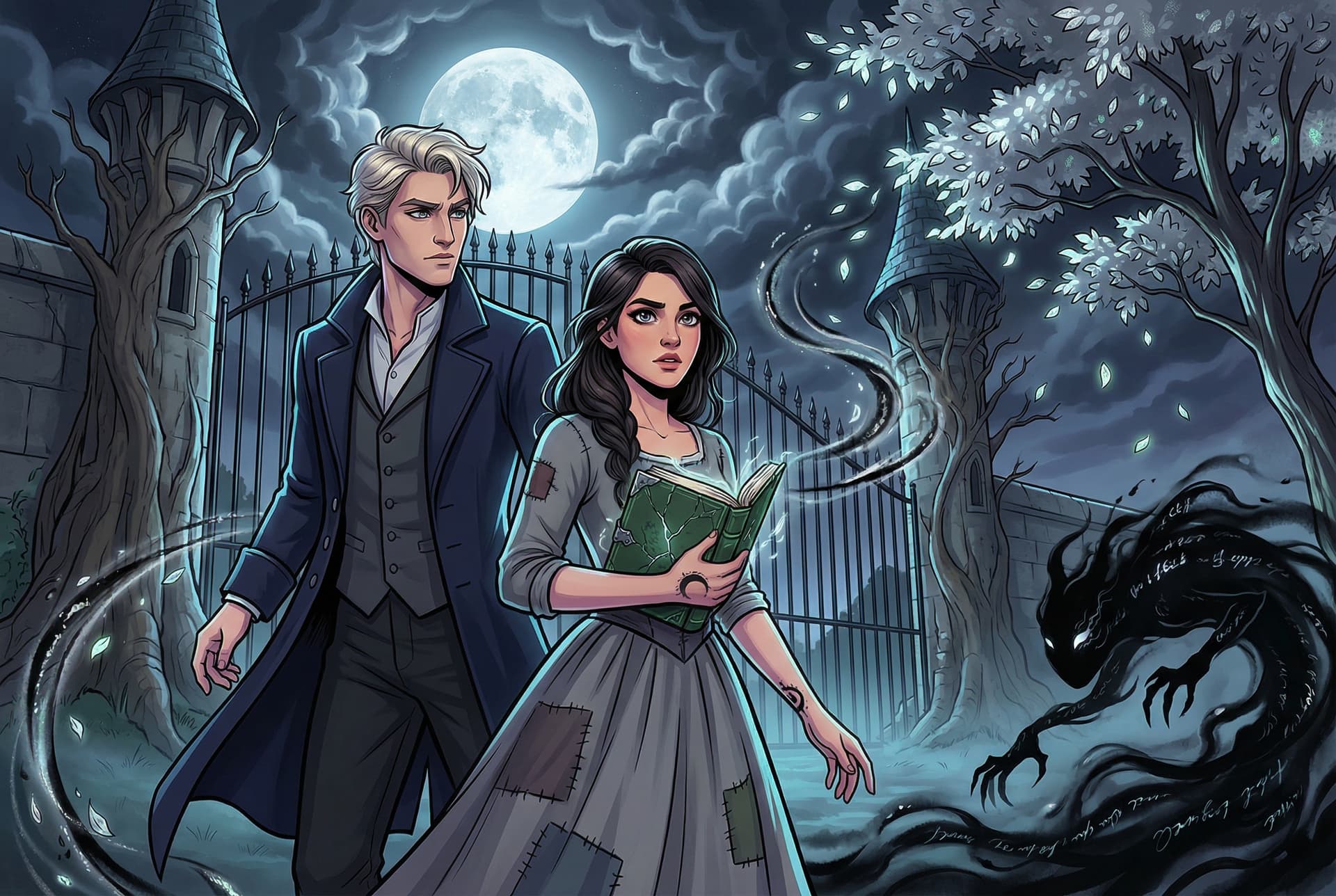
Inside the cabinet lay a narrow book bound in cracked green leather. Her name was stamped on the cover in silver letters that glimmered without light.
GENEVIEVE.
No last name.
Her pulse thudded. She should have shut the cabinet, returned to her cot, and pretended she hadn’t felt the strange tug behind her ribs all day—the sensation of being pulled toward something she didn’t believe in.
But the green book hummed.
She opened it. The first page wasn’t paper. It was skin-thin and warm, and a sting ran up her arm. Words rose under her fingertip, as if the book were remembering how to speak.
*To the one who wears my ink: if you’re reading this, then the world has already failed you. I’m sorry.*
*It will try to name you Nobody.*
*Do not believe it.*
Genevieve swallowed. The air trembled.
A shadow slid across the office wall. Genevieve turned.
A boy—about sixteen—leaned against the doorframe like he’d always belonged there. He had a sharp jaw and hair so pale it looked like spilled moonlight. His coat was dark, old-fashioned, and his gray eyes resembled storm clouds deciding whether to break.
“You shouldn’t be in here,” he said. Not threatening. Like a warning he’d given too many times.
Genevieve gripped the book. “Neither should you.”
His mouth twitched. “Fair.”
She stepped between him and the cabinet. “Who are you?”
He flicked his gaze to the book.